What Makes a Meal Plan Sustainable
A sustainable meal plan is one you can follow consistently for months or years — not just a few days before giving up. The difference between a meal plan that works and one that doesn't usually has nothing to do with the foods themselves. It comes down to whether the plan fits your real life.
Unsustainable meal plans share common traits: they require exotic ingredients you don't enjoy, demand hours of daily cooking, eliminate entire food groups without medical necessity, or are so rigid that a single deviation feels like failure. Sustainable plans are the opposite — they're built around foods you actually like, accommodate your schedule, leave room for flexibility, and feel like a natural extension of how you already eat, just more intentional.
A 2018 meta-analysis published in the BMJ examined 14 popular diets and found that virtually all named diets produced similar weight loss results at the 12-month mark. The strongest predictor of long-term success was not the specific diet followed but the participant's ability to adhere to it consistently — adherence explained more variance in outcomes than macronutrient composition.
"Dietary adherence is the single most important predictor of long-term weight management success. The best diet is the one that an individual can sustain while meeting their nutritional needs and supporting their health goals." — Dr. Christopher Gardner, Professor of Medicine, Stanford University
A sustainable meal plan has five core characteristics:
- Nutritionally adequate: It meets your calorie, macro, and micronutrient needs.
- Enjoyable: It includes foods you genuinely like eating.
- Practical: It fits your cooking skill level, time constraints, and budget.
- Flexible: It accommodates social events, travel, and days when things don't go to plan.
- Progressively adjustable: It can evolve as your goals, preferences, or circumstances change.
Assessing Your Nutritional Needs
Before building your meal plan template, you need to know your targets. A sustainable meal plan starts with clear, personalized nutritional goals — not arbitrary calorie numbers borrowed from someone else's plan.
Step 1: Calculate Your Calorie Target
Start with your Total Daily Energy Expenditure (TDEE), which accounts for your Basal Metabolic Rate (BMR) plus your daily activity level. The Mifflin-St Jeor equation is the most widely validated formula for estimating BMR:
- Men: BMR = (10 x weight in kg) + (6.25 x height in cm) - (5 x age) + 5
- Women: BMR = (10 x weight in kg) + (6.25 x height in cm) - (5 x age) - 161
Multiply your BMR by an activity factor (1.2 for sedentary, 1.375 for lightly active, 1.55 for moderately active, 1.725 for very active) to get your TDEE. Then adjust based on your goal: subtract 300–500 calories for gradual fat loss, eat at TDEE for maintenance, or add 200–400 for muscle gain.
Step 2: Set Your Macro Targets
Once you have a calorie target, divide it among protein, carbohydrates, and fat:
- Protein: 1.6–2.2 g per kg of body weight for active individuals, or 0.8–1.0 g/kg for general health. Protein is the foundation — set this first.
- Fat: 0.8–1.2 g per kg of body weight. Fat is essential for hormones and nutrient absorption — don't cut it too low.
- Carbohydrates: Fill the remaining calories with carbs. Carbs fuel activity and brain function, and there's no reason to restrict them unless you have a specific medical or dietary preference.
According to the American Journal of Clinical Nutrition, individuals consuming higher protein diets (1.2–1.6 g/kg/day) preserved significantly more lean mass during weight loss compared to those following standard protein intakes — making protein target-setting the single most impactful step in meal plan design.
Step 3: Identify Micronutrient Priorities
Most people don't need to track every vitamin and mineral, but being aware of common gaps helps you build a plan that covers them naturally. Focus on getting adequate fiber (25–30g/day), calcium, iron, vitamin D, and potassium through food variety rather than supplements when possible.
Building Your Weekly Template
The most effective meal plans are built on a weekly template with structured flexibility — a framework that provides consistency without becoming a rigid, day-by-day prescription that falls apart the moment something changes.
The Core Rotation Approach
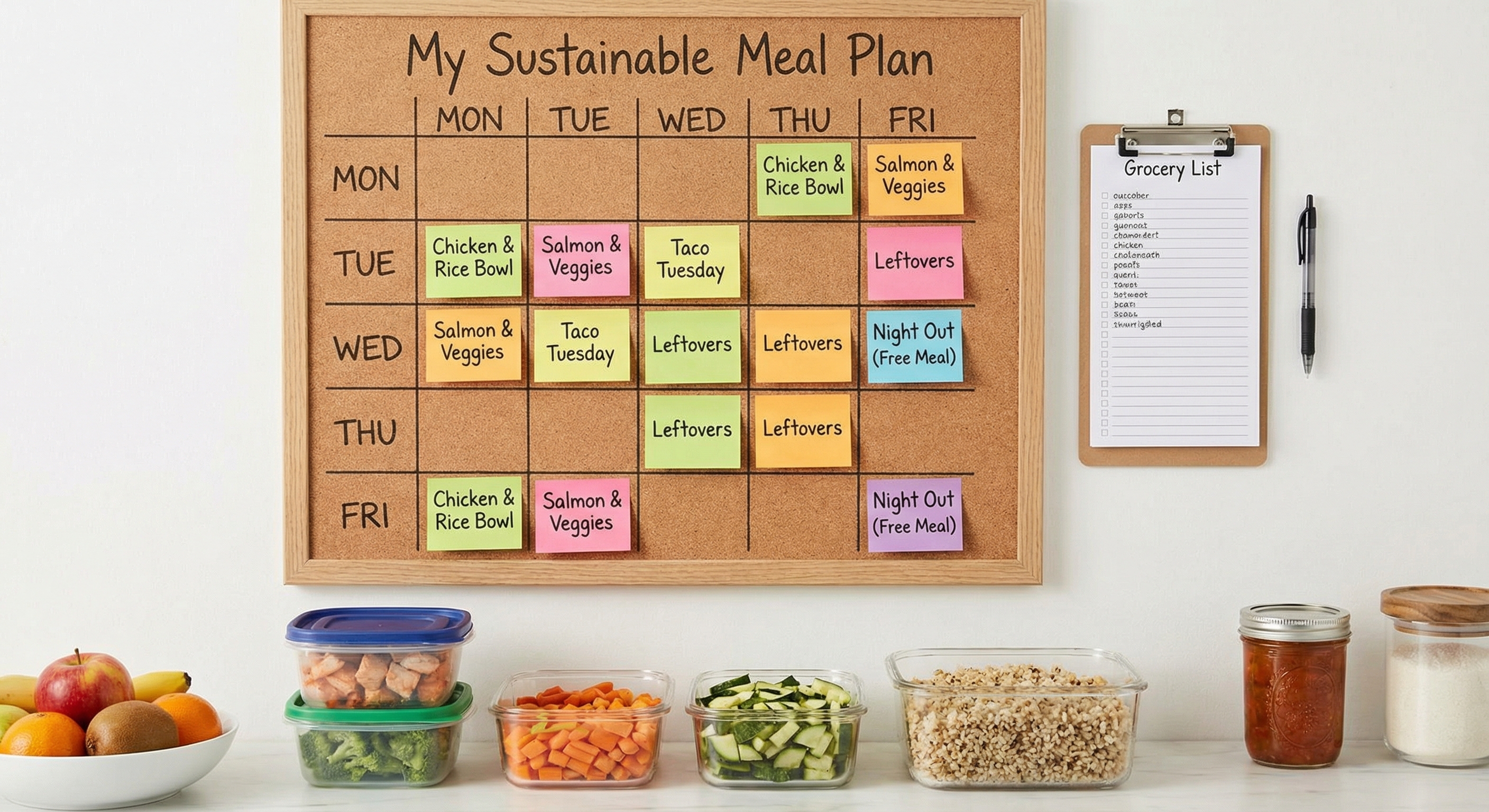
Instead of planning 21 unique meals per week (7 days x 3 meals), build a rotation of 8–12 go-to meals that you cycle through. This drastically reduces decision fatigue, simplifies grocery shopping, and means you only need to learn a handful of recipes well rather than constantly trying new things.
Structure your rotation like this:
- 2–3 breakfast options: Choose quick, protein-rich breakfasts that you can prepare in under 10 minutes. Examples: overnight oats with protein powder, eggs with toast and avocado, Greek yogurt with granola and berries.
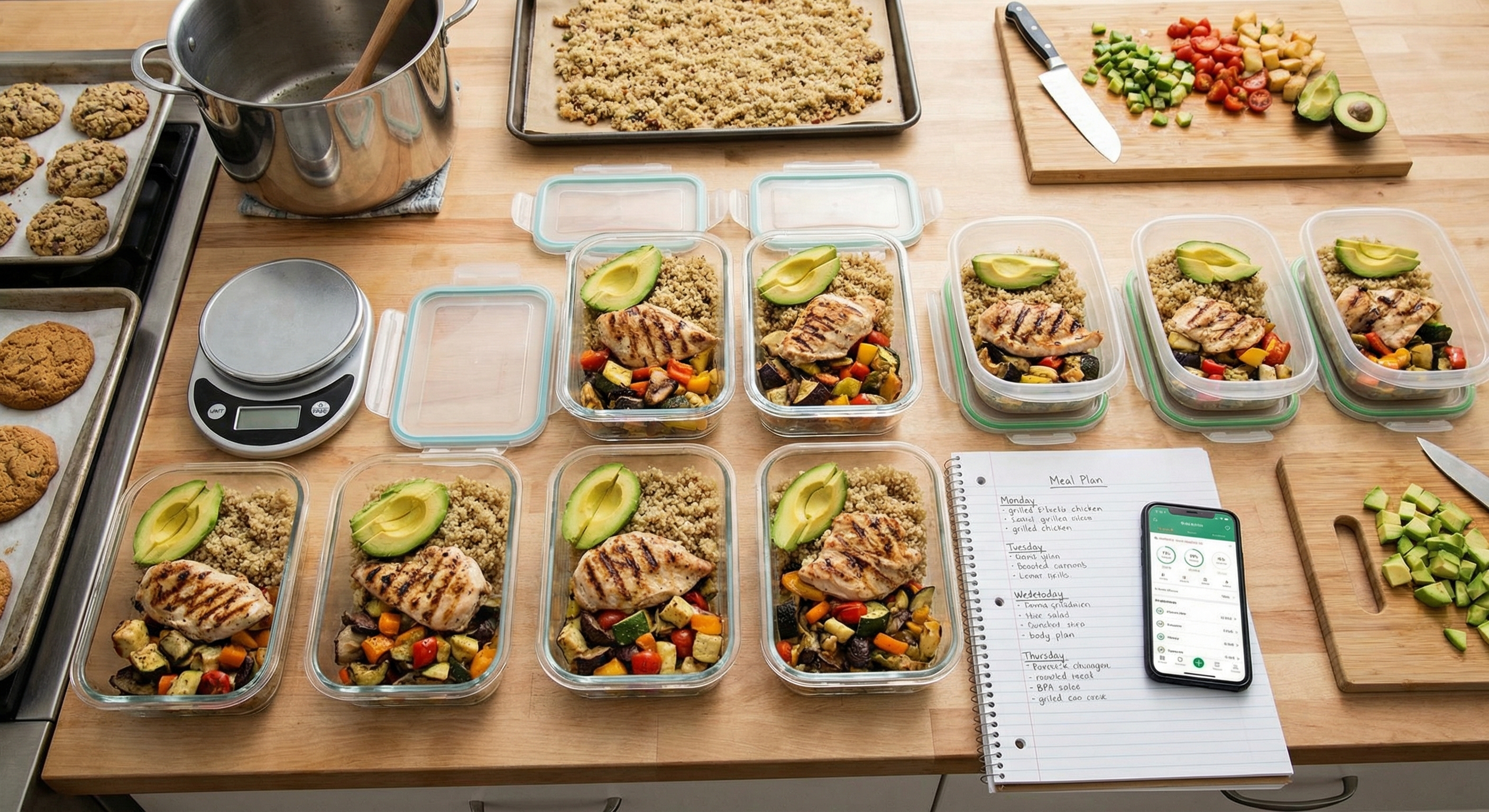
- 3–4 lunch options: Focus on meals that are easy to batch-cook or assemble. Examples: chicken and rice bowls, large salads with protein, wraps with lean protein and vegetables, soup with bread.
- 3–4 dinner options: These can be slightly more involved since you typically have more time in the evening. Examples: stir-fry with protein and rice, baked salmon with sweet potatoes and vegetables, pasta with meat sauce and a side salad, sheet-pan chicken with roasted vegetables.
- 2–3 snack options: Keep these simple and macro-friendly. Examples: fruit with nut butter, protein bars, trail mix, cottage cheese with berries, hummus with vegetables.
Mapping Your Week
Assign meals loosely to days based on your schedule:
- Busy weekdays: Lean on batch-prepped meals and quick options. Monday through Wednesday might feature the same lunch rotation that you prepped on Sunday.
- Moderate days: Cook one fresh meal (usually dinner) and use prepped ingredients for the rest.
- Flexible days: Leave one or two days per week unplanned for social meals, restaurant dinners, or trying new recipes. This built-in flexibility prevents the all-or-nothing mentality that destroys rigid plans.
The goal is a template, not a script. If Wednesday's planned chicken bowl doesn't appeal to you, swap it with Thursday's stir-fry. The nutritional outcome is nearly identical, and the flexibility keeps you engaged rather than resentful.
Grocery Shopping Strategy
A sustainable meal plan lives or dies at the grocery store. If the right ingredients aren't in your kitchen, even the best plan on paper won't translate to meals on your plate.
Build a Master Grocery List
Based on your core meal rotation, create a reusable grocery list that covers all the ingredients you need for a typical week. Organize it by store section to speed up shopping:
- Proteins: Chicken breast, ground turkey, salmon, eggs, Greek yogurt, tofu, canned tuna
- Grains and starches: Brown rice, oats, whole wheat pasta, sweet potatoes, bread
- Vegetables: Broccoli, spinach, bell peppers, onions, tomatoes, mixed salad greens
- Fruits: Bananas, berries, apples, avocados
- Fats and condiments: Olive oil, nut butter, nuts, seeds, salad dressings, soy sauce
- Dairy and alternatives: Milk, cheese, cottage cheese
- Pantry staples: Canned beans, broth, spices, protein powder
Shopping Tips for Sustainability
- Shop once per week. A single well-planned shopping trip is more efficient and less expensive than multiple impulse trips. Plan your trip for the same day each week to build the habit.
- Buy proteins in bulk and freeze. Chicken, ground meat, and fish freeze well. Buying in bulk saves money, and thawing a night in advance takes minimal effort.
- Choose versatile ingredients. Ingredients that work in multiple meals save money and reduce waste. Chicken breast works in bowls, wraps, salads, stir-fries, and sandwiches. Rice pairs with virtually any protein.
- Don't shop hungry. This advice is cliched because it's consistently true. Shopping on an empty stomach leads to impulse purchases that don't fit your plan.
- Accept frozen and canned options. Frozen vegetables and canned beans are nutritionally comparable to fresh versions, cost less, last longer, and require less prep. Research published in the Journal of Food Science found that frozen fruits and vegetables retained comparable — and in some cases superior — vitamin content to their fresh counterparts, particularly when fresh produce had been stored for several days post-harvest.
Adapting and Staying Flexible
The number one reason meal plans fail is rigidity. Life doesn't follow a spreadsheet, and a meal plan that can't accommodate the unexpected will be abandoned the first time something disrupts it.
Build in Planned Flexibility
- Designate 1–2 "free" meals per week. These aren't cheat meals — they're meals where you eat what you want without planning in advance. A Friday dinner out or a Sunday brunch with friends. Knowing these are built into the plan removes the psychological tension of "breaking" your diet.
- Use a "swap list." For each protein, carb, and fat source in your plan, identify 2–3 substitutes. If you planned salmon but it's not available, you know that chicken thighs or shrimp fit the same macro slot. This prevents small disruptions from derailing the entire day.
- Track weekly averages, not daily perfection. If you're over on carbs on Tuesday but under on Wednesday, your weekly average may still be on target. Obsessing over daily precision leads to stress that undermines adherence.
Evolve Your Plan Over Time
A sustainable healthy eating plan is not static. Review and adjust every 2–4 weeks:
- Rotate in new recipes gradually. Replace one meal in your rotation every week or two. This keeps things fresh without overwhelming you with novelty.
- Adjust macros based on results. If you're not recovering well from workouts, you may need more carbs. If you're not seeing body composition changes, your calorie target may need refinement. Use your tracking data to make informed adjustments rather than guessing.
- Account for seasonal changes. Your meal preferences naturally shift with the seasons. Summer plans might feature more salads and grilled proteins; winter plans might lean toward soups, stews, and roasted vegetables. Let your plan evolve with the calendar.
- Reassess every 3 months. Your goals, activity level, weight, and preferences change over time. A quarterly review ensures your plan still fits your current life.
Data from the National Weight Control Registry — which tracks over 10,000 individuals who have maintained significant weight loss long-term — shows that 98% of successful maintainers modified their food intake and continued to self-monitor their diet, with the majority following consistent but flexible eating patterns rather than rigid meal plans.
Using NutriMind for Meal Planning
NutriMind's AI meal planning feature is designed to support the sustainable approach described in this guide. Instead of handing you a generic 7-day plan that ignores your preferences, NutriMind's AI generates meal suggestions based on your specific macro targets, food preferences, dietary restrictions, and the meals you've already logged that day.
This means your meal plan adapts in real time. If you eat a higher-carb breakfast than planned, the AI adjusts its lunch and dinner suggestions to compensate — keeping your daily totals on track without requiring you to recalculate everything manually. If you don't like a suggested meal, you can regenerate alternatives instantly.
NutriMind also simplifies the tracking side of meal planning. When you follow the plan, you can log meals with a single tap since the nutritional data is already calculated. On days when you deviate from the plan, AI photo recognition and barcode scanning let you log what you actually ate just as quickly.
The combination of intelligent planning and effortless tracking removes the two biggest barriers to sustainable meal planning: the effort of creating the plan and the effort of sticking to it. The AI handles the first, and the logging tools handle the second.
If you're ready to build a meal planning guide that actually fits your life, try NutriMind free and let the AI create your first personalized plan in minutes.
Written by Johnny
Founder of NutriMind and health-tech developer. Johnny builds AI-powered tools that make nutrition tracking faster and more accessible for everyone.
Connect on LinkedIn →Try NutriMind Free
AI-powered food tracking, barcode scanning, macro coaching, and more — available on iOS, Android, and web.