Why Meal Prep Works for Weight Loss
Meal prepping is the practice of planning, preparing, and portioning your meals in advance — typically for several days or an entire week. For weight loss specifically, meal prep is one of the most effective strategies because it removes the daily decision fatigue that leads to poor food choices.
When you're hungry and tired after a long day, you're far more likely to order takeout, grab convenience food, or overeat than to cook a balanced meal from scratch. Meal prep eliminates that failure point entirely. Your food is already cooked, portioned, and ready to eat — the healthy choice becomes the easiest choice.
A 2017 study published in the International Journal of Behavioral Nutrition and Physical Activity analyzed the dietary habits of over 40,000 adults and found that individuals who spent more time on meal preparation consumed significantly more fruits and vegetables, had higher overall diet quality scores, and were 28% less likely to be overweight compared to those who rarely prepared meals at home.
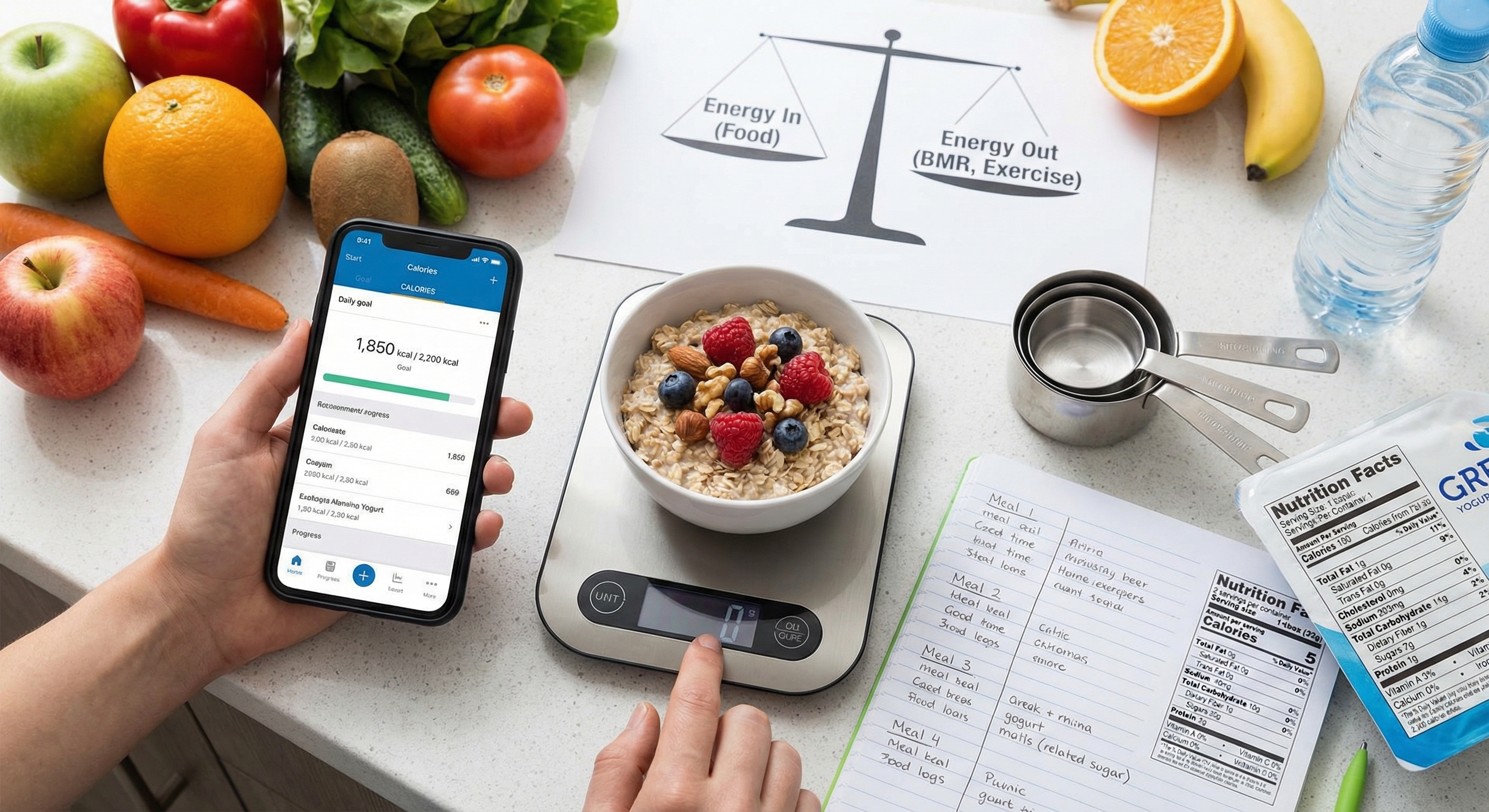
Meal prep also gives you precise control over ingredients and portions. When you cook a restaurant meal, you have no idea how much oil, butter, or sugar was used. When you cook at home and portion the results into measured containers, you know exactly what's in each meal — making calorie and macro tracking straightforward and accurate.
"Food decisions are most vulnerable to failure when they're made under stress, time pressure, or hunger. Meal preparation shifts those decisions to a calm, planned environment where people consistently make better nutritional choices." — Dr. Wendy Wood, Professor of Psychology and Business, University of Southern California
Getting Started: Equipment and Planning
You don't need a professional kitchen to meal prep effectively. Here's the essential gear and a simple planning process to get started:
Essential Equipment
- Glass or BPA-free meal prep containers: Get a set of 10–15 containers with secure lids. Glass containers are microwave-safe and don't absorb odors. Look for containers with compartments if you want to keep foods separated.
- Digital kitchen scale: For accurate portioning. This is non-negotiable if you're counting calories or macros — a $10–15 scale pays for itself in accuracy within the first week.
- Sheet pans and baking sheets: Sheet pan cooking lets you roast proteins and vegetables simultaneously with minimal hands-on time.
- A large pot and skillet: For batch cooking grains, soups, stir-fries, and sautéed proteins.
- Reusable bags or small containers: For portioning snacks like nuts, cut vegetables, or fruit.
Weekly Planning Process
- Set your calorie and macro targets. Before choosing recipes, know your daily calorie goal and approximate macro split. This prevents building meals that don't align with your objectives.
- Choose 3–4 proteins, 2–3 carb sources, and 3–4 vegetables. You don't need a different recipe for every meal. Mix-and-match components keep things varied without overwhelming your prep session.
- Write your grocery list from the plan. Only buy what you need. This reduces food waste and removes impulse purchases that might tempt you during the week.
- Block 2–3 hours on a weekend day. Most people prep on Sunday. Having a consistent time slot turns meal prep into a routine rather than a chore.
According to the International Journal of Obesity, people routinely underestimate their food portions by 25–50%, a problem that meal prepping with a kitchen scale effectively eliminates.
Building Balanced Prep Meals
A well-structured prep meal for weight loss follows a simple formula: lean protein + complex carbohydrate + vegetables + healthy fat. This combination provides sustained energy, keeps you full, and delivers the micronutrients your body needs while staying within a calorie deficit.
The Plate Template
- Protein (30–40% of the meal): Chicken breast, turkey, lean ground beef, salmon, tilapia, eggs, tofu, or tempeh. Aim for 25–40g of protein per meal. Protein is the most satiating macronutrient and has the highest thermic effect, meaning your body burns more calories digesting it.
- Complex carbohydrates (25–35%): Brown rice, quinoa, sweet potatoes, whole wheat pasta, oats, or lentils. These provide sustained energy and fiber, which slows digestion and prevents blood sugar spikes.
- Vegetables (25–35%): Broccoli, spinach, bell peppers, asparagus, zucchini, green beans, or mixed greens. Vegetables add volume and micronutrients with very few calories — you can eat large servings without significantly affecting your calorie target.
- Healthy fat (a small portion): Olive oil for cooking, a quarter of an avocado, a small handful of nuts, or the fat naturally present in salmon or eggs. Fat enhances flavor and nutrient absorption but is calorie-dense, so measure it.
Sample Prep Meals for a 500-Calorie Target
- Meal A: 150g grilled chicken breast (231 cal), 130g brown rice (150 cal), 150g roasted broccoli (52 cal), 1 tsp olive oil (40 cal) = ~473 calories, 42g protein
- Meal B: 140g baked salmon (280 cal), 150g sweet potato (130 cal), 100g steamed asparagus (22 cal), lemon and herbs (5 cal) = ~437 calories, 35g protein
- Meal C: 150g lean ground turkey (225 cal), 100g quinoa (120 cal), 200g mixed stir-fry vegetables (60 cal), 1 tsp sesame oil (40 cal) = ~445 calories, 37g protein
Batch Cooking Strategies
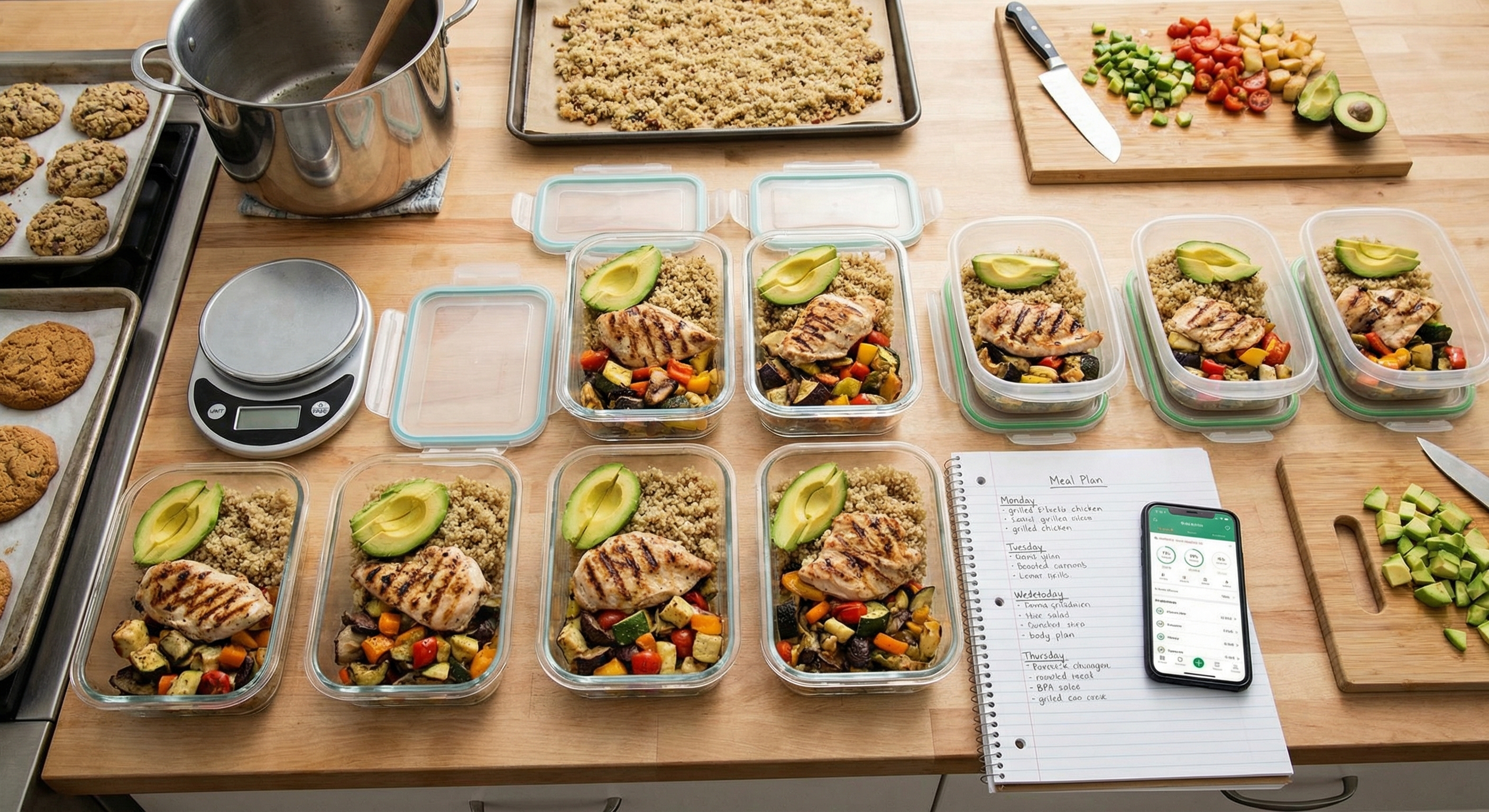
Efficient batch cooking means preparing large quantities of food simultaneously so your entire week is covered in a single session. Here are proven strategies to maximize output while minimizing time:
Use the Oven as Your Primary Tool
Sheet pan cooking is the meal prepper's best friend. Season your proteins and vegetables, arrange them on sheet pans, and let the oven do the work. You can roast 2 kg of chicken breast and 3 pans of vegetables in under 40 minutes with almost no active effort.
Cook Grains in Bulk
Rice, quinoa, and sweet potatoes cook passively. Start a large pot of rice or quinoa at the beginning of your prep session and let it cook while you handle other tasks. Cook double what you think you need — cooked grains keep for 4–5 days in the fridge and freeze well.
Stagger Your Timers
Run multiple cooking processes simultaneously. While chicken bakes in the oven (25 min), cook rice on the stove (18 min) and steam broccoli in a separate pot (5 min). With practice, a full week of lunches and dinners takes 2–3 hours.
Prep Snacks Separately
Portion snacks into individual bags or containers during your prep session. Pre-measured servings of almonds (23 almonds = 164 cal), cut vegetables with hummus, hard-boiled eggs, or Greek yogurt cups prevent mindless oversnacking during the week.
Freeze for Freshness
Food safety guidelines recommend consuming refrigerated meal prep within 3–4 days. If you're prepping for a full 7 days, freeze meals for days 4–7 and transfer them to the fridge the night before. This keeps food safe and tasting fresh throughout the week.
Tracking Meal Prep with a Nutrition App
Meal prep and nutrition tracking are a powerful combination. When you prepare food in bulk, you have the perfect opportunity to calculate precise nutritional values for each container — something that's nearly impossible when cooking individual meals on the fly.
The Recipe Method
The most accurate approach is to weigh every ingredient that goes into a batch recipe, log them all in your tracking app as a custom recipe, specify the number of servings, and let the app calculate per-serving macros. For example:
- Weigh 900g of raw chicken breast, 600g of dry brown rice, 500g of broccoli, and 2 tablespoons of olive oil.
- Enter each ingredient into a recipe in your nutrition app.
- Set the recipe to 6 servings (if you're making 6 containers).
- The app divides total calories and macros by 6, giving you exact per-container values.
Once saved, you reuse that recipe every week with a single tap — no re-entering required.
The Container Method
If you don't want to create recipes, you can weigh and log each ingredient per container individually. This takes more time upfront but is straightforward: weigh the chicken in container 1, log it; weigh the rice, log it; weigh the vegetables, log it. Save the entire meal as a "favorite" and reuse it.
A 2019 study in Nutrients found that participants who combined meal planning with dietary self-monitoring had a 64% higher likelihood of achieving their weight loss targets compared to those who only monitored intake without planning, highlighting the synergistic effect of preparation and tracking.
Meal Prep Tracking with NutriMind
NutriMind makes meal prep tracking seamless with its custom recipe builder and meal favorites system. You can input all the ingredients in a batch cook, specify the number of portions, and NutriMind calculates the exact calories and macronutrients per serving. Save it once, and re-logging that meal every day takes a single tap.
For ingredients you buy regularly, NutriMind's barcode scanner pulls exact nutritional data from verified databases — so you never have to guess whether your brown rice is 170 or 190 calories per serving. The app also stores your meal history, making it easy to rotate between prep recipes week to week without rebuilding anything from scratch.
NutriMind's AI Macro Coach can even suggest adjustments to your prep meals if you're consistently over or under on a particular macro. If your meal prep lunches are always low on protein, the coach will recommend swapping in a higher-protein carb source like lentils or adding a side of Greek yogurt.
If you're ready to combine the power of meal prep with effortless tracking, try NutriMind free and see how much simpler it is when your meals are planned, prepped, and pre-logged before the week even starts.
Written by Johnny
Founder of NutriMind and health-tech developer. Johnny builds AI-powered tools that make nutrition tracking faster and more accessible for everyone.
Connect on LinkedIn →Try NutriMind Free
AI-powered food tracking, barcode scanning, macro coaching, and more — available on iOS, Android, and web.